Connecting the future to the past on Dartmoor’s Hall Farm
On the fringe of Dartmoor sits a centuries old farm that was once the home of Ken Watkins, the founder of the Woodland Trust. Ken’s guiding hand on the farm’s woodlands is still visible today.
The farm, of around 300 acres, is now under the management of Seb Powell and his partner Freya, who moved here from Chagford with their family about eighteen months ago, to take up this tenancy of the Woodland Trust Estate.
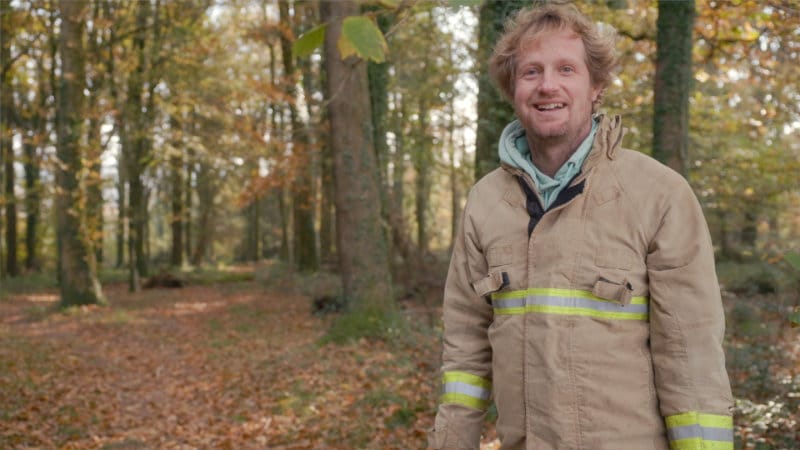
WATER is at the closing stages of filming a documentary about the Erme and the many individuals and organisations, up and down the catchment, who are making positive contributions to restore the river to its naturally healthy state. The Woodland Trust is one of the contributors to the documentary, and we wanted to film the story of Seb’s ambitious plans for this jewel in the Woodland Trust’s crown.
Hall Farm currently has around 80 acres of woodland including ancient and veteran trees plus mature hedgerows. Numerous springs, tributaries, riffles and leats all combine to create a watery soundtrack to the farm, before they eventually arrive in the Erme.
Under Seb’s stewardship over the last eighteen months or so, the tree coverage has already expanded. There are ambitious plans for a total of 20,000 trees to be planted further expanding the abundant, diverse and species-rich habitats and helping to slow and hold back water in winter for use in the summer.
The business end of the farm revolves around a small herd of ten milking cows and 10 beef breeding cows which, with followers, brings the herd to sixty. This is deliberately kept on a scale that enables the farm to be self- sufficient in terms of feed (grass and hay). That helps during prolonged summer droughts and long wet winters, as the cattle out winter. These factors reduce livestock carrying capacity on the farm, but low inputs and lower stocking rates bring improvements both environmentally and in biodiversity.
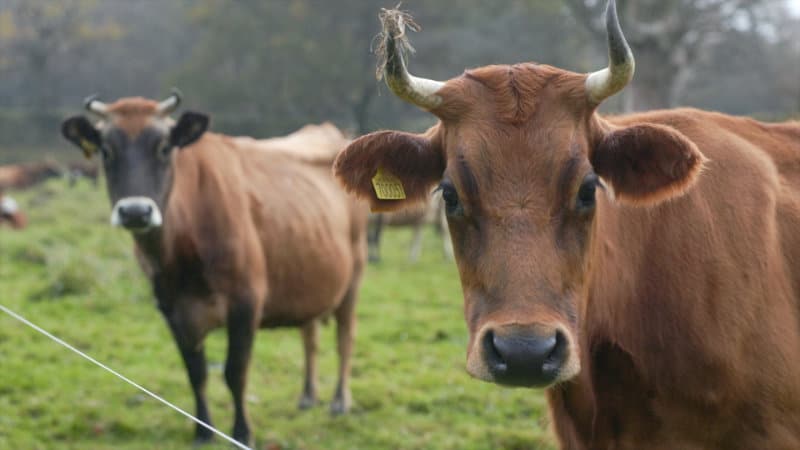
For ease of management, the milking parlour is designed around just two stalls where cows are machine milked. Milk and yogurt are packed and sold directly from the farm via a small farm shop which also offers frozen cuts of Hall Farm beef. The farms products are also sold by local retailers.
Calves are not weaned until after 3-4 months, so during that time the milk production for retailing, that’s available from that cow, reduces. But the calves, and ultimately the farm, benefits as calves receive better nutrition and subsequently tend to give better yields.
Walking round the farm it is easy to see old hedge banks and field boundaries that give a snapshot of the way the land used to be farmed. Original hedge banks can now be protected by being sheltered with buffer strips of new trees which could subsequently become wood pasture boundaries.
Wood pasture (grazing pasture within woodland) was once a traditional farming practice and has returned to Hall Farm in some fields. The cattle were attracted to the shelter the trees provided and they started calving there. This natural process is possible because of the controlled scale of livestock farming.
Future tree planting will be at different densities in different fields and, as part of making the farm resilient, consideration has been given to species that can thrive in predicted climate change conditions.Hall Farm represents a unique opportunity to predict, to some extent, what new woodland planting might develop into. Looking at the results of Ken Watkins’ inspired planting many decades ago, we can visualise how the new planting might mature.