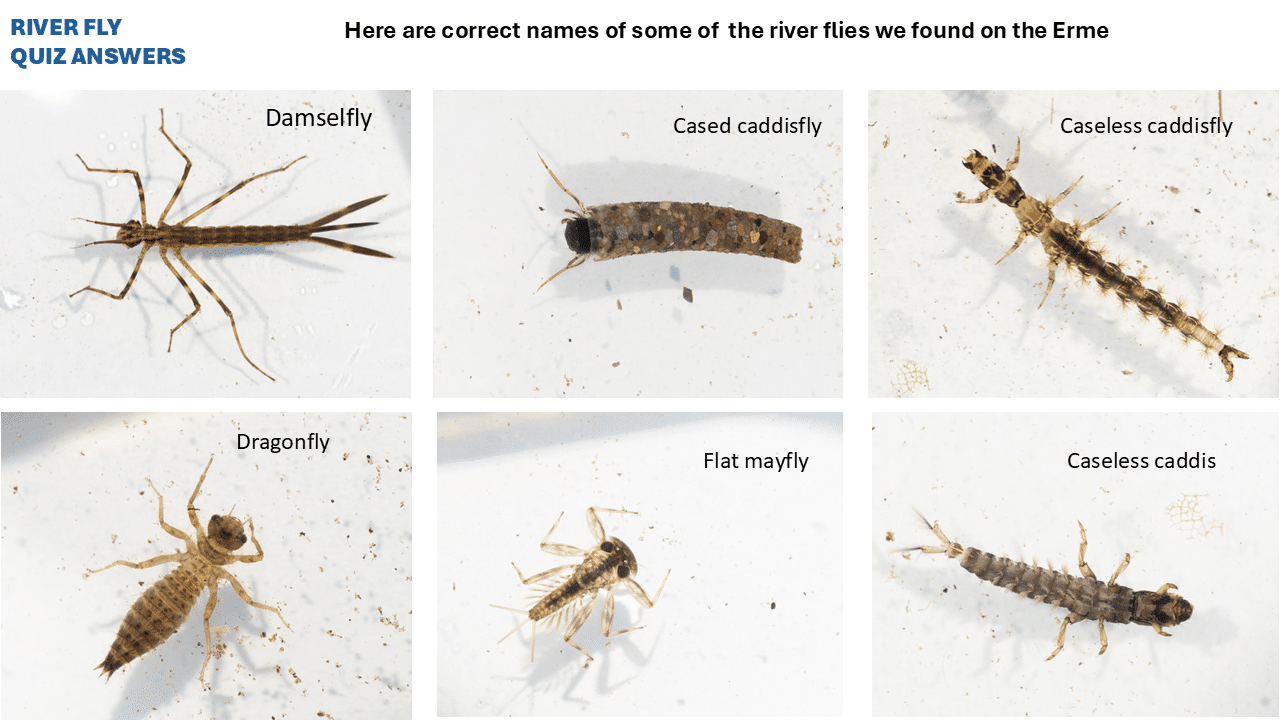
Secrets of the riverbed. The team get Riverfly training.
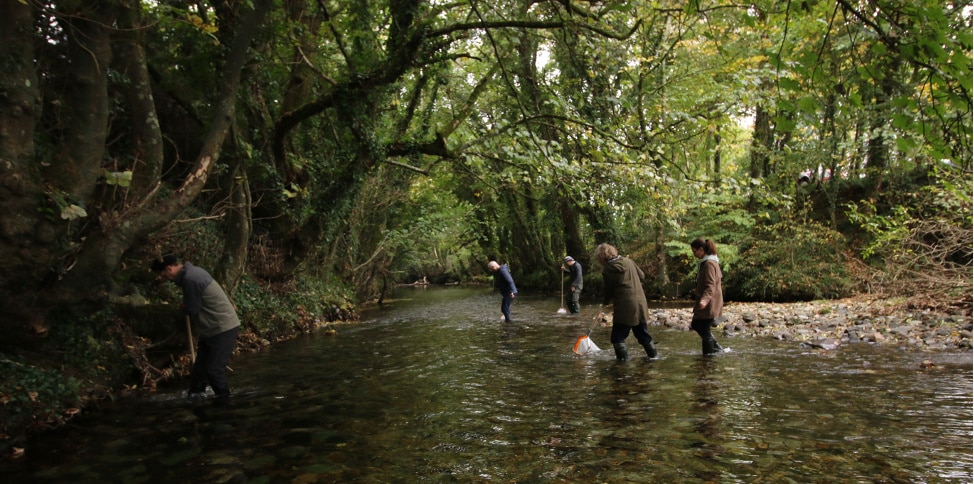
So far the team has had two field workshops with one on the Lud Brook and one on the Erme. A third is planned for early November. Invertebrate samples are taken using a technique called ‘kick sampling’ where the river bed is disturbed by foot shuffling and disturbed invertebrates are caught in a net held a couple of feet downstream so that the flow pushes them into the net. The net contents are decanted into sampling trays.
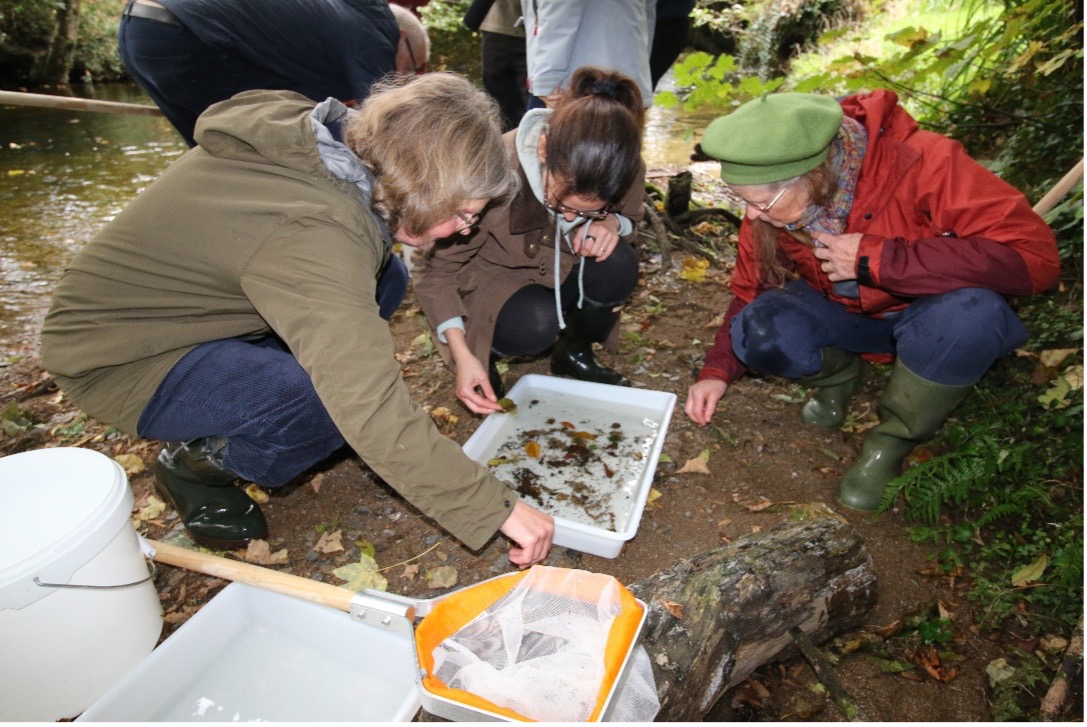
The trays can then be taken to the bank or, when available, a nearby table to be examined with unwanted natural detritus removed. The creatures can be transferred by a pipette, to avoid injury, and deposited in a segmented tray on a group-type basis so they can be counted. The diversity the team found was quite encouraging with shrimp probably having dominance in terms of quantity. We are not yet expert enough to publish findings but, under Simon’s experienced eye and with his extensive knowledge, we are getting there.
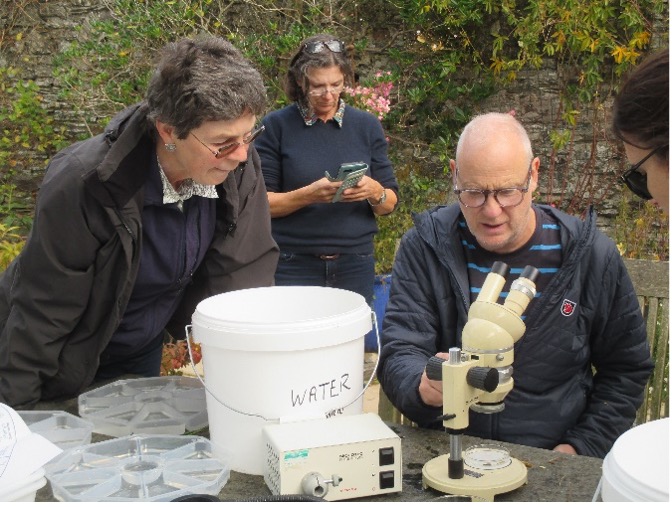
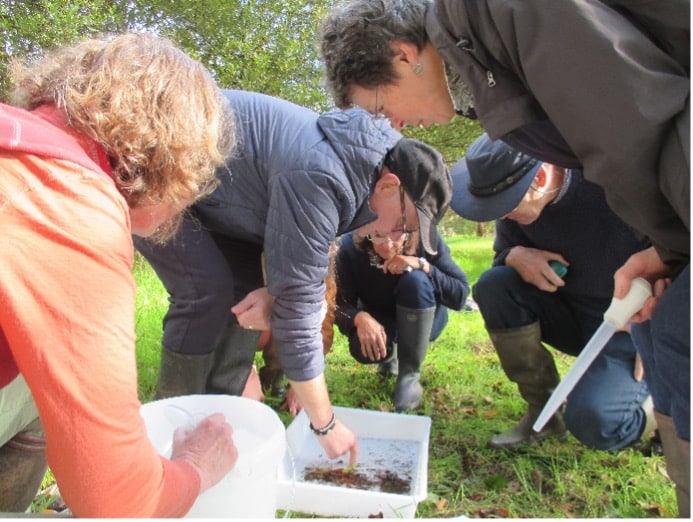
Huge thanks to Simon for his encouragement and patience and to Richard Braithwaite for the superb macro photography of our ‘finds’. The training workshops were captured on video by our volunteer videographer Ali Wade, as part of our documentary about the Erme. Simon has kindly agreed to appear in our film to talk about the aquatic life in the Erme.
HOW GOOD A RIVER FLY SPOTTER WERE YOU?
Answers to our Newsletter quiz are below.